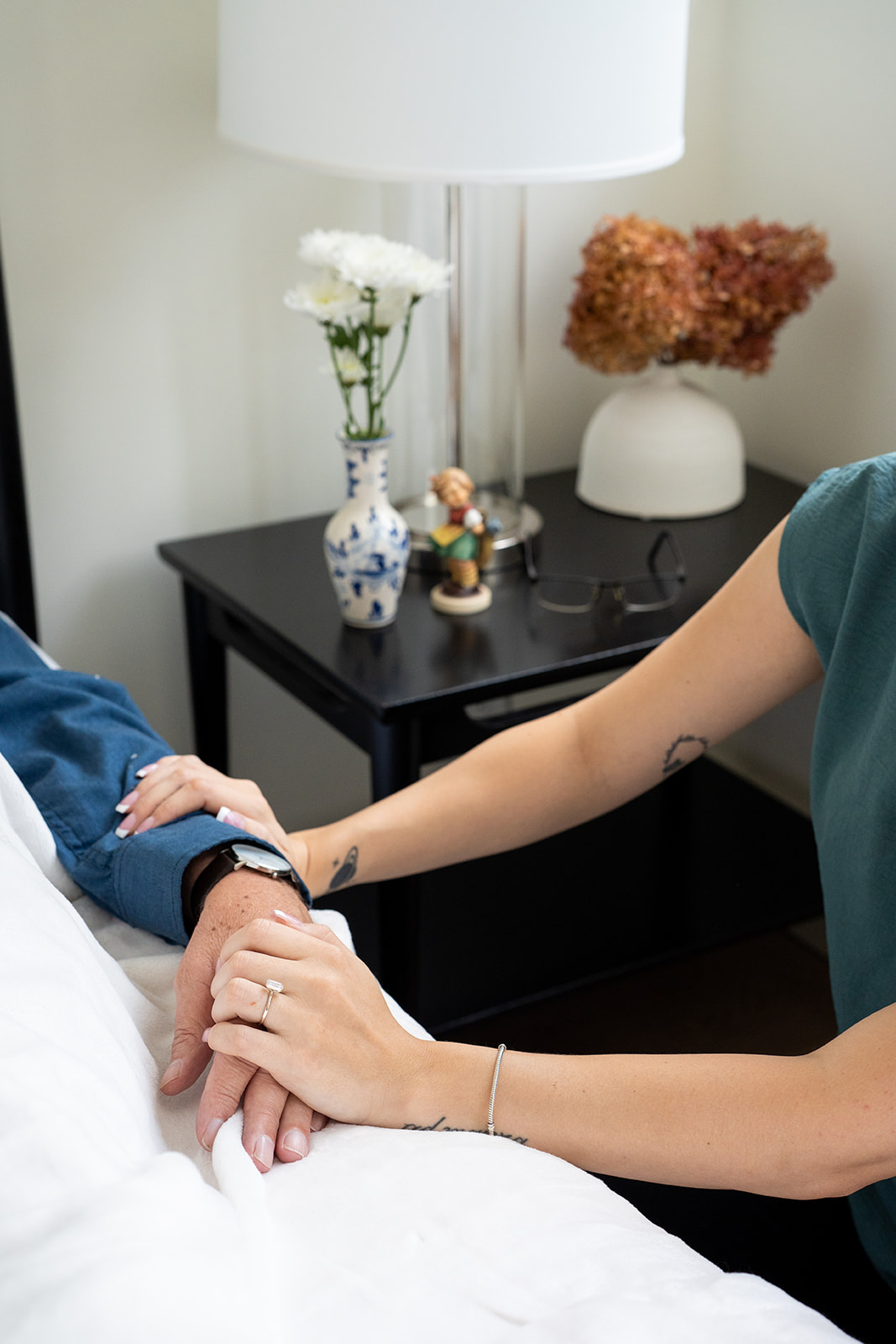
24 Hour Care
More Than Around-the-Clock Care.
For our 24/7 clients, we help coordinate the practical details of daily life so care remains organized, consistent, and responsive.

Medication Support
We help keep medication routines organized through reminders, communication with the care team, and attention to changes or concerns that may need follow-up.

Grocery Coordination
Grocery needs can be planned and coordinated around preferences, meal plans, dietary needs, and what is already available in the home.
Meal Planning & Preparation
We help plan meals around favourite foods, routines, dietary needs, and family preferences, then coordinate preparation as part of the client’s daily support.
Keeping Supplies Stocked
We keep track of everyday household and personal care supplies so essential items are available when they are needed and caregivers can focus on providing consistent support.
Laundry & Household Routines
Laundry and everyday household routines are incorporated into care so the home stays comfortable, organized, and manageable.
24 Hours of Coverage. One Coordinated Team.
Around-the-clock care is provided by a coordinated team working scheduled shifts, so someone is available throughout the day and night without relying on one caregiver to do everything.
Coordinated Shift Coverage
Day and overnight caregivers work together to provide continuous support.
One Consistent Care Plan
Each caregiver follows the same routines, preferences, and Living Well Plan.
Communication Between Caregivers
Important updates are shared between shifts so changes in health, routines, or needs are not missed.
Ongoing Best Life Oversight
We coordinate staffing, communication, care planning, and adjustments as needs change.
24/7 Care, Built Around the Whole Person.
Around-the-clock home care provides the ongoing presence. Our Living Well Framework allows us to build other Best Life services into that schedule based on the client’s goals, abilities, routines, and changing needs.

When Is 24/7 Care The Right Choice?
Overnight Safety Concerns
Wandering, falls, nighttime confusion, or needing help with toileting and mobility.
Advancing Dementia
Memory, judgment, orientation, or behavioural changes make time alone increasingly difficult or unsafe.
Increasing Daily Care Needs
Support is needed throughout the day for personal care, meals, mobility, continence, or medication routines.
Caregiver Exhaustion
A spouse or family caregiver can no longer safely sustain around-the-clock responsibility.
Returning Home From Hospital
Temporary or ongoing support can help make the transition home safer after illness, surgery, or hospitalization.
Remaining at Home
Continuous care can help preserve familiar routines and surroundings as support needs increase.
Palliative & End-of-Life Care
Families may need continuous support to provide comfort, personal care, supervision, and reassurance during the final stages of life.